Check us out on Facebook and YouTube
All Pets Education and Training
  • Home
    • About >
      • Qualifications, Continuing Education and Professional Development
      • Reviews
  • Contact
  • Courses/Classes & Private Tuition
    • Why choose Virtual training?
    • Zoom Consultations
    • Virtual Classes >
      • Bond and Bloom - 12 week zoom
      • Separation Struggles - 12 week virtual course
      • Reactivity and Growing Disengagement from Distractions - 12 week course
      • Virtual - Cat training class
      • Virtual - Cooperative Care
      • Virtual - Training with multiple dogs
      • Virtual - Tricks Course
    • Online Courses >
      • K9 manners online - info >
        • K9 Manners Online >
          • K9 Manners Period 1
          • K9 Manners Period 2
          • K9 Manners Period 3
          • K9 Manners Period 4
          • K9 Manners Period 5
          • K9 Manners Period 6
      • Cooperative Care Online - info >
        • Cooperative Care Online >
          • Cooperative Care Period 1
          • Cooperative Care Period 2
          • Cooperative Care Period 3
          • Cooperative Care Period 4
          • Cooperative Care Period 5
          • Cooperative Care Period 6
      • Building Confidence and Resilience Online - info >
        • Building Confidence and Resilience >
          • Building Confidence and Resilience - pre start
          • Building Confidence and Resilience - 1
          • Building Confidence and Resilience - 2
          • Building Confidence and Resilience - 3
          • Building Confidence and Resilience - 4
          • Building Confidence and Resilience - 5
          • Building Confidence and Resilience - 6
    • Private Tuition >
      • Private Pricing
    • Book Club (its free)
  • Enrichment
    • Dogs
    • Cats
    • Birds >
      • Homemade Bird Treats
    • Pocket Pets
    • Horses
  • Learning Theory
    • The Four D's of training
    • Consistency
    • Cues vs Commands
    • Resilience
    • Using food in training
    • Setting up for Success
  • Body Language
    • Canine Body Language
    • Feline Body Language
  • Kids & Dogs
    • Preparing Your Pooch For Baby's Arrival
    • Fun Games for Kids & Dogs
    • How Kids Should Interact with Dogs - Dr Sophia Yin
    • How Kids Shouldn't Interact with Dogs - Dr Sophia Yin
    • Family Paws Information sheets
  • Husbandry Behaviours
    • Muzzle Training
    • Elizabethan Collar
    • Sustained Target
  • Common Doggy Dilemmas
    • Adolescence - Sexual maturity and puppy licence expiration
    • Adrenaline Levels
    • Creating Calmness
    • Alone time is good
    • Separation Distress
    • OMG!! You've got a new puppy (or are thinking about one)... What next?
    • Buyers remorse
    • Adopting 2 Puppies
    • Dog Fights
    • Escaping Dogs
    • What's so good about rolling in poo & other stinky stuff?
    • My dog is Barking - Help!!
    • Growling is Good
    • Muzzle Training
    • Dog Vision
    • Firework Fear
    • Thunderstorms
    • Coprophagia - The act of Poo Eating
    • Managing Multiple Mutts
    • Puppy Socialisation and Fear Periods
    • Newly adopted rescue dog
    • Humping Hounds
    • Deference Training - Karen Overall protocol
    • Dog Parks. The Good, The Bad & The Ugly.
    • Dominance in Dog Training
    • Dog-Dog Play
    • Leash Reactivity in Dogs
    • Look At That (LAT)
    • Management IS Training
    • The Reactive Dogs Brain
  • Boredom Busters
    • Recycled Enrichment
    • Crate Rest Crazies
    • Make your dog a TugToy >
      • Rules for TUG & GIVE
    • Bottle Bug Besties
    • Milk Bottle Bungee
    • Snuffle Mat Mayhem
    • Hot Weather Hints
    • Wet Weather Fun
    • Shaping Behaviour
    • The Bucket Game
    • Scent Work at Home
    • Proprioception
    • ACE Free work
    • Box Feeding
  • Special Needs Pets
    • Blind Dogs
    • Deaf Dogs
  • Helpful Hints & Ideas
    • Concept Training
    • Emotions and the affect on our pets
    • Choosing a Trainer
    • Resilience
    • Psychologist vs Psychiatrist
    • Relaxation Protocol
    • Consistency
    • Cues vs Commands
    • The Power of Choice
    • The Gut Microbiome
    • Sleep - why it is so important
    • The Collar Grab
    • Knowing when to say goodbye
    • Grief and Depression in pets
    • Preparing your dog for a vet visit
    • TTouch Wrap
    • Easter Dangers
    • Winter and Your Pet
    • Chooks As Pets
    • Making and Using a Longline
    • Tips for Taking Great Pet Pics
    • Keeping your pets safe this Christmas
    • Increasing the value of dry food used for rewards
    • Aussie Aussie Aussie Oi Oi Oi
    • Car Safety and your pet
    • Moving House
  • Keeping Cats Happy - Helpful Tips
    • Feline Happiness
    • Keeping Cats Happy - Choosing a Litter Tray
    • Keeping cats Happy - Choosing a scratching post
    • Introducing Cats and Dogs
    • Introducing Cats
  • All Pets Ed Case Studies
  • Newsletters
  • What to do in an Emergency
    • CPR
    • Bloat or Gastric Dilation Volvulus
    • Tick Paralysis
    • Toad Toxicity
    • Snake!
    • Xylitol Toxicity
    • Common Toxins
    • Wildlife
  • Policies and Procedures
  • Free Puppy Ebook

Bonnie and Bailey

18/12/2018

1 Comment

 
Picture
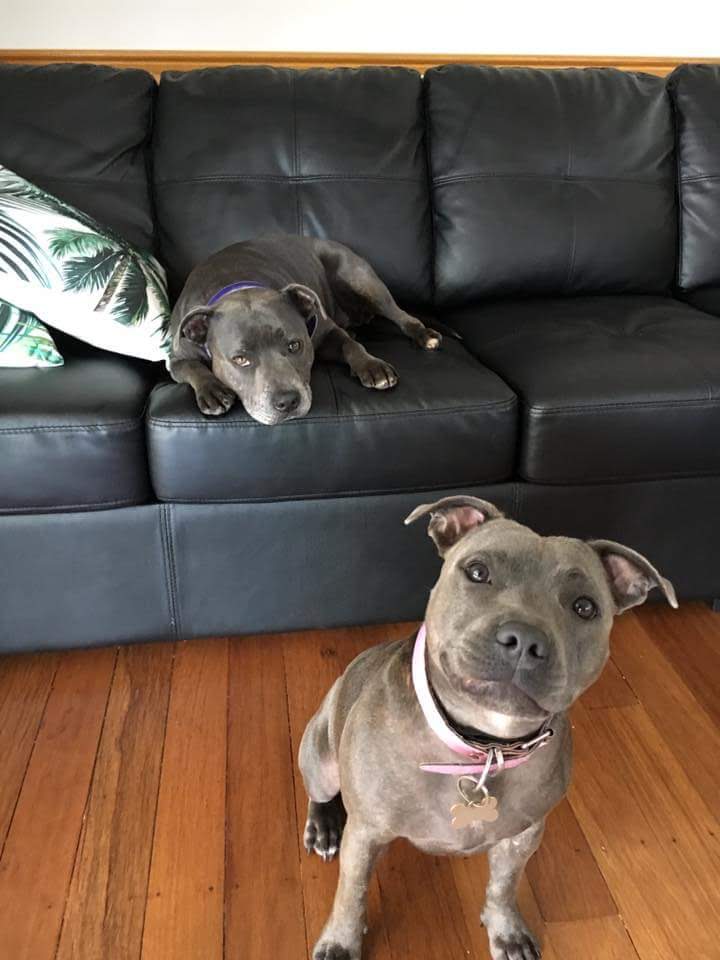
Meet Bonnie and Bailey, two beautiful blue female staffies.  I first met them just over 2 years ago, for interdog aggression issues.  They were fighting with arousal and excitement.  

Fighting in dogs that are the same breed, sex and within 3 years of age of each other is common, especially as one or both approach the age of 18months-2years and reach social maturity.

So what did we do?  First I want to say that the girls parents are amazing, and follow through with all that is suggested.  

We started with a thorough veterinary examination including blood work to rule out underlying biochemical reasons.  Next we ensured separation after an incident of up to a week to allow the adrenaline and cortisol levels to return to normal.

We also implemented many things including management techniques that could be used to redirect them if their owners could predict an incident may be about to occur.

This included mat/station/place training, target training, crate training, leave it, muzzle training and impulse control work.  

​Take the time to follow the girls on Instagram @bonnieandbailey_

​
Impulse control (also known as stimulus control) is incredibly useful, and by using the name game the girls learn that they can wait to be cued to do something and in doing so will be reinforced for their patience.  This means that the drive to "butt" in is greatly reduced or completely remedied.

See below for more information and a visual demonstration of the name game in action.

The other things useful for the girls in training included deference - teaching the dogs to look to their owners and make eye contact for guidance, and also to take a breathe on cue. Being able to cue a breath, means that you can then use this to slow your dogs breathing down, and just like us humans this has a calming affect.  And last but not least, the very powerful look at that game - which teaches a dog to engage and disengage with potential triggers.

However none of this would have been possible without first reducing some of the anxiety the girls were feeling.  This included the use of Adaptil collars (firmly fitted as they are activated by body heat), nutraceuticals and pharmaceuticals under veterinary direction.

If you have dogs at home that are having interdog issues, please don't give up without seeking appropriate attention and help from a veterinarian, qualified force free trainer and behaviour veterinarian where required.  It cannot always be rectified, however it often can and with careful management the stress for all involved can be greatly reduced.
​
1 Comment

Gronk and vet visits

26/9/2018

1 Comment


Meet Gronk - he is one of my hero's. 

Picture
,
I first met Gronk in mid 2017 when he enrolled in the Ready Vet Go! course for husbandry skills and good experiences in the vet clinic. 

Gronk previously has been nervous at vet clinics. This has been especially exacerbated by examination and restraint.  As  a result it was very stressful for all involved to examine him and draw blood etc.

What I have to say, first and foremost, I love his parents.  They have stuck by his side and have worked with him at his pace to achieve the wins we have.  Gronk also has Separation Anxiety (diagnosed by veterinary behaviourist).  He is on medication which helps him learn and feel less stress.  However even with the meds on board, he is not one for vet visits.  Who can blame him - he hasn't had great experiences, and it really only takes one bad experience.  Do you love your dentist?  No offence to my dentist, I like him, however I would much rather run into him outside of the dental office - and I haven't had a traumatic experience.

So what did we do?  Over the course of 4 weeks - he came to the Veterinary Clinic - we let him sniff, investigate and have good things happen.  

We also taught him a couple of fun games - and these games in the end allow him choice.  The biggest one is the sustained target - in this situation, whilst he is engaged with his target, he is giving a go ahead signal.  If he disengages, whatever we are doing stops.  It is so powerful, once an animal knows they have choice they will allow that little bit more.

The use of the "sticky bone" can also be paired with handling, brushing, washing etc.  When they engage and lick, start with gradual touches etc, if they stop licking, you stop.  Again that power of choice over what is happening is very very empowering to the learner.

We also muzzle trained him using the Baskerville ultra muzzles. These are basket muzzles - they allow a dog to be able to pant (very important if they are stressed), eat (take rewards) and drink.  The added advantage is he is used to it, the muzzle is not the predictor of scary things, and in future if he needs it, it will make all around him more comfortable. Once vet staff feel comfortable, the dogs feed off of the energy and they feel more comfortable.

The next thing to get him used to was handling from a stranger.  This included general body touches, feeling for lumps and bumps,  listening to his chest with a stethoscope and most importantly being able to hold up a vein and poke it with a fake (though pointy) needle.  We also paired the sound and feel of clippers with good things, as well as the feel of the cold and smelly alcohol swab.  In my past experience - its that alcohol swab which is often hardest. 

All of these things were done gradually, and at his pace.  He could choose to stop, and choose to keep going.

​
See the finished product below.    

Thank you Tessa and James, and of course Gronk.  You have worked so hard with your boy, and I am so proud of him.

For information on preparing your dog for a vet visit click here

For how to train a sustained target follow this link 

And to register your interest in upcoming Ready Vet Go! courses follow this link
1 Comment

A case study with a difference - me - single incident learning and fear

3/8/2018

5 Comments

 
Picture
Ok, this case study is one with a bit of a difference.  I had something else planned, but as you can tell, I am a month late writing and publishing the newsletter.


Why? Well, that is a long story, but in short South Africa has some amazing things to offer and, some not so amazing things about it – we witnessed both.
 
So, what is this case study about?  Me, the effects of single incident learning, stress, resilience and recovery.
 
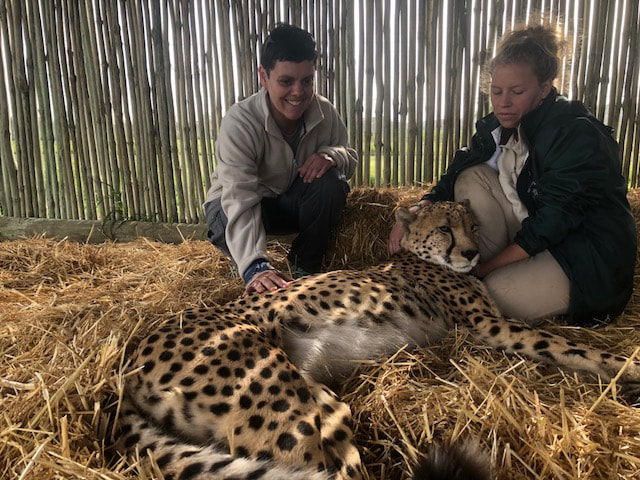
As many know I was heading to South Africa for a few weeks in June and July.  During my time there I was working with my friend and colleague Dr Kat and some others.  We were working with cheetahs. 


The cheetahs were amazing, and they will forever hold a place in my heart.  I would also like to say that 99% of the people we met during our stay in South Africa were also wonderful, however we met with a couple that weren’t.
 
So, a quick summary.  We were sleeping in our house which we believed to be secure. Doors locked, electric fence etc, on a property with a security presence.  Unfortunately, in the early hours of the morning, we were woken by 2 armed men.  There is nothing quite like a torch in your face, and gun to your head to get the adrenaline pumping.


A struggle ensued, and two of us were physically injured. We have, or will recover from the physical injuries. We were very lucky, although there were scuffles and shots fired, we didn’t die, weren’t raped, and the things stolen (tech gear, cash etc) can be replaced.


But what have I learnt? That the good old adrenaline surge bypassed my thinking brain and went straight to my primitive brain resulting in the fight or flight response that kicked in. I can guarantee you, there was no active thought process or planning throughout the ordeal.  I wouldn’t have thought it before, but I fight.  I hit, kick, bite, and yell.  And during this time, I was in no state to learn.  This is exactly why asking your dog to perform a certain behaviour when it is under great stress is pointless.  The dog is unable to process that information at the time.  It is not the dogs choice, it is a physical reaction and as far your dog is concerned, his life is in danger and he has no time to focus on you or perform your desired cues. 


With that sudden release and huge surge of adrenaline, we also had an increase in cortisol, a primary stress hormone.  It takes several days for your cortisol levels to return to normal. 

Following the night of the incident, we were hyper vigilant for several days (at least a week), and still after a week, night time, noises, and the look of certain people, made us very nervous.  
​

During the remaining time in South Africa (Kat and I finished the program as was initially planned), we were still affected.  This was mostly at night, and included insomnia, nightmares, tiredness, startling easily and an edginess or feeling of agitation.  This continued even once home and in the land of Aus, that is so much safer than we give it credit for.  Seriously, thank your lucky stars if you are a fellow Aussie.
​


It has now been 6 weeks and I am very comfortable during the day, and certainly improving at night. However there are still ongoing stress effects, this mostly affects my sleep which would average 3-4 hours per night (actually its usually more 2 of a solidish chunk and then awake every 5-10mins or so for the rest of the night).

I can see where it only takes one traumatic episode for a dog (or human) to have a long lasting or ongoing response.

So, what am I doing to help myself?

I have sought help, just as you should seek help for your pets if they were in a similar fight/flight scenario. 


I am working on my own behaviour modification program, and gradually easing back in to activities that were making me uncomfortable.  I can now sleep with the light off, and no longer need a weapon (frypan or horseshoe – was the best I had but I would of gladly used them if needed) nearby just in case.  I can go outside at night for brief periods and not automatically panic.  I have signed up for Pawgust which is walking 30mins a day for 30 days and raising money for Guide Dogs at the same time.  During the walking, my plan is to increase my walk in the dark (sunrise or sunset), by 1 minute a day.  Therefore, by the end of the month I will be walking entirely in the dark.  I will also include training for loose lead in the newsletter, as obviously walks are much more enjoyable if you aren’t dragged down the street.
 
What else I have learnt? We are all different, just as all our dogs are different.  We all responded differently at the time of the incident (3 of us in the house) and this has continued afterwards.  Resilience, is a key word and I have also written an article about it since.  It is something that we should aim to instil in ourselves, our pets and children etc.  Those that are more resilient will bounce back faster, and have less long-term effects.  I believe I am resilient. 

​The support of friends and family plays a huge role in recovery as well. I am incredibly grateful for the amount of support I have had from my friends and family.  Think about this from your pets perspective too.  If your pet can't trust you to look out for them, how will they feel safe around you?

 
So, why did I write this?  Well, I want you to think about any incidents (remember it only takes the one) that your pets have, and how best you can help them recover.  Allow them time, work at their pace whilst slowly increasing criteria.  If you are having troubles with your pet and their behaviour after such an incident, don’t delay and seek help from a qualified reward-based trainer or behaviour veterinarian sooner rather than later.


5 Comments

Cheesie - Knee reconstruction and crate confinement

24/3/2018

2 Comments

 
Picture
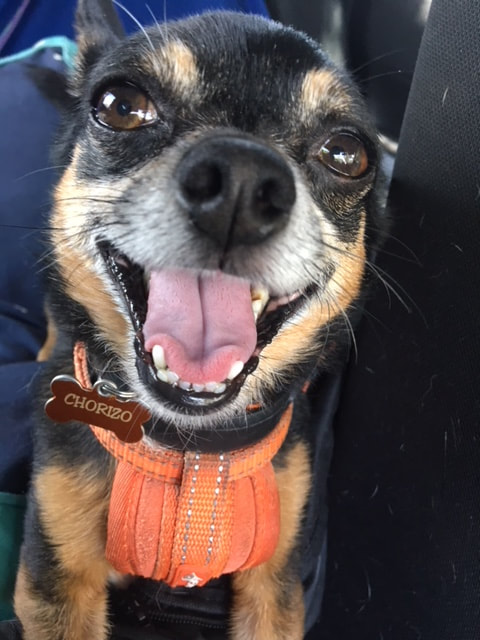
This little guy is Chorizo but he prefers to be called Cheesie. 

​Cheesie is a 7 year old desexed male Chihuahua.  He has had luxating patellas as long as we have had him, and until recently they did not cause him any problems.  However late last year he had a few seizures and we assume somehow got his leg caught during one of them - resulting in a much more unstable and sore knee.

​Previously Cheesie has been a very active boy, and completed a 34km walk over 3 days not long ago, however since his injury he was unable to complete even a small walk without pain.

​He went to surgery at Veterinary Specialist Services (VSS) on the 12th January this year to have his knee stabilised.

​Following the surgery we were tasked with keeping our very active little guy quiet.  Thank DOG for crate training as over the next 10 weeks that is where he spent the majority of his time.

​So how do you keep a bright bouncy boy happy that is on confinement.

​We did lots of things that helped to enrich his world.

​Things we did included:
  • ​Going to work and having one on one time
  • Taking him for a drive - this was a favourite of his
  • Involved him in regular dog walks (he went via the pram)
  • Lots of food enrichment toys
  • Target training
  • Physio and balance work once we were allowed
  • Smelling things (either on a walk, or novel things you bring home for them)
  • Just sitting in the yard and watching the chooks and neighbours etc
  • Brain games - see Crate Rest Crazies liink

​Cheesie also has had several physio sessions and under specialist and physio instruction we gradually increased his level of exercise.

​We started with slow, 5 minute walks and have built up to 20 minute walks.  I cannot emphasise the importance of allowing your dog to smell and make the most of the time they do have out of confinement.  That little bit of mental stimulation made a huge difference in helping Cheesie settle back in his crate.

​Good news however.  After 10 weeks of confinement, he had  follow up xrays and it looks like the bone is healing well. 
​He is allowed freedom from the crate and can gradually build back up to his pre surgery exercise level.

​This makes for one very happy Cheesie.
2 Comments

January 10th, 2018 Lucy-Lou Separation Anxiety

10/1/2018

1 Comment

 
Picture
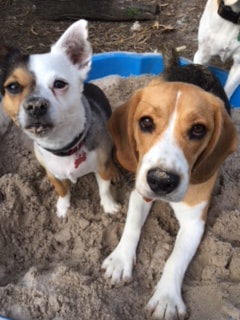
Meet Lucy-Lou the 10 month old Beagle. We adopted her into our family 6-8 weeks ago via the The Beagle Club of Queensland and their rehoming service.

Lucy-Lou is a beautiful girl...except she had pretty severe separation anxiety.

When she arrived, it became apparent very quickly that she was not comfortable away from human company. It didn't matter how many dogs were with her.

So what did we do?

We implemented a multimodal approach.

#1 Pheromone therapy - Adaptil collar 24/7 - fitted firmly as it is activated by body heat, and replaced every 4 weeks.

#2 Talked to General Practice Vet and Behaviour Veterinarian - Lucy-Lou started on Anti-anxiety medication after 2 weeks of behaviour modification (when things weren't progressing at the speed I would like). She still has situational medication now if we need to go out. Medication does not sedate her however, just allows her brain not to panic, and her to learn.

#3 Mat/Station training - teaching her to go to a place and be comfortable and confident

#4 Home alone training - this includes working at her pace and not pushing her past her limits if at all avoidable.

#5 Technology was our friend - cameras, apps, remote food dispensers.

​#6 Calming music (Through A Dogs Ear, or audiobooks (I used Game Of Thones).


When Lucy-Lou started her home alone training, we used a physical barrier. She wasn't alone, just prevented from following humans. We were right on the other side and didn't leave her sight (baby gates/pen).

Initially her progress was slow, and her comfort zone was literally seconds. The Pet Tutor (an awesome little machine) would reinforce calm every 2-5 seconds.

Over time, we built up time second by second and increased distance away from her to include out of sight etc. This wasn't an easy task, and initially felt incredibly overwhelming.

We also spent time uncoupling cues such as putting shoes on, picking up keys, moving toward front door, touching car door and opening car door.

I had an advantage that some do not have. Lucy-Lou did not have to be left alone for longer than she was comfortable at any time as I could take her to work, or arrange friends and family to come and puppy sit. Having this set up helped immensely, and in the past is where I have recommended clients to take their annual leave to begin the training process and set their dogs up to succeed as fast as possible.

Over a period of approximately 4-6 weeks we were able to build up her alone time surprising rapidly, until she was comfortable being alone for up to 4-5 hours. She may be capable of longer, however this has not been tested.

Although she has improved 100% on what she was, we still implement tools for planned departures - including music/audio books, the Pet Tutor now set at 1 treat every 3-5 minutes, long lasting chews/enrichment toys and situational medication 2 hours prior to going out.

Please, if your dog suffers distress when you leave, contact your veterinarian, a behaviour veterinarian and force free trainer. Follow this link for information on how to choose a trainer.


1 Comment
Forward>>

    Author

    Trish Allan - MDI (CPDT)
    ​Certified Pet Dog Trainer,
    Pro Dog Trainer, 
    ​Fear Free Certified Professional (Elite, Veterinary Level 1, 2 and 3, Puppy and Kitten, Animal Trainer, Groomer and Avian).
    ​Member of Delta Institute, APDT (Association of Pet Dog Trainers), PPG Australia (Pet Professional Guild), ISFM (International Society of Feline Medicine), IAABC (International Association of Animal Behaviour Consultants, and CVE (Centre for Veterinary Education - Sydney University)

    Archives

    December 2020
    October 2020
    June 2020
    April 2020
    December 2019
    September 2019
    August 2019
    April 2019
    December 2018
    September 2018
    August 2018
    March 2018
    January 2018

    Categories

    All

    RSS Feed

All Material Copyright All Pets Education and Training 2024
​

I acknowledge the Traditional Owners of the land where I work and live. I pay my respects to Elders past, present and emerging. I celebrate the stories, culture and traditions of Aboriginal and Torres Strait Islander Elders of all communities who also work and live on this land.